

Reading failed bearings
Reading spall patterns on roller bearing raceways
Where the spall sits on the raceway, how many zones there are and whether it wanders tells you about adjustment, roundness, alignment and oil viscosity.
Position and pattern are the clue
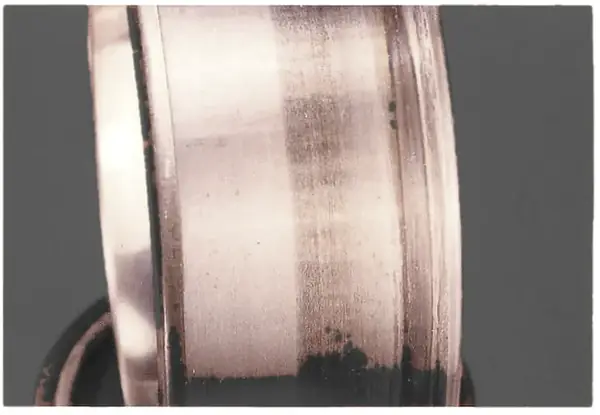
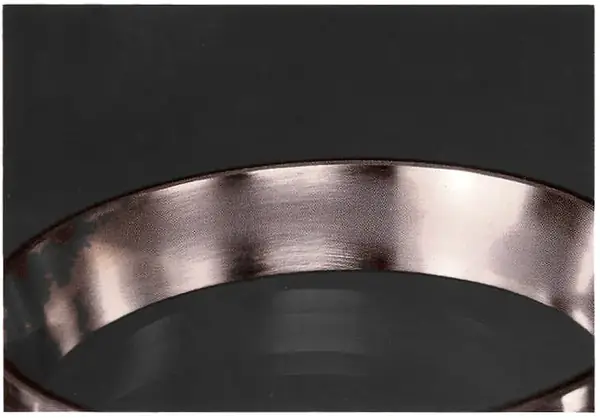
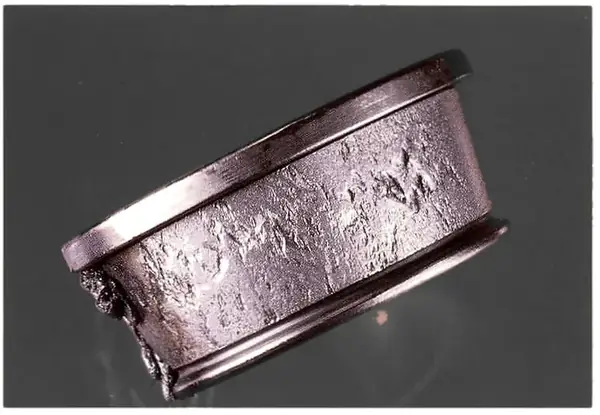
Normal wear on cylindrical and tapered roller bearings is smooth and uniform across the raceway and rollers. Some heavily loaded bearings have crowned rollers and show wear concentrated toward the middle. Anything beyond that, including scoring, metal displacement or heat colour, is abnormal. Once spalling starts, the pattern tells you what loaded the bearing wrongly.
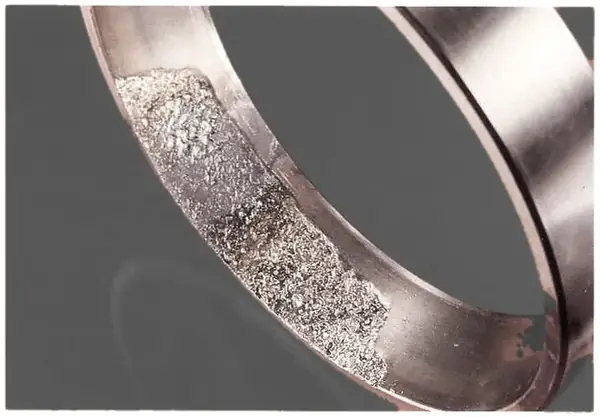
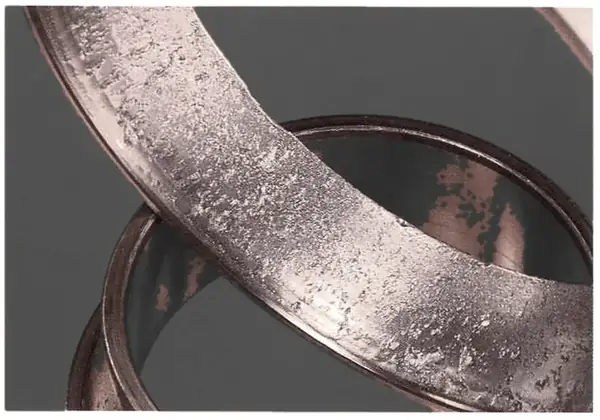
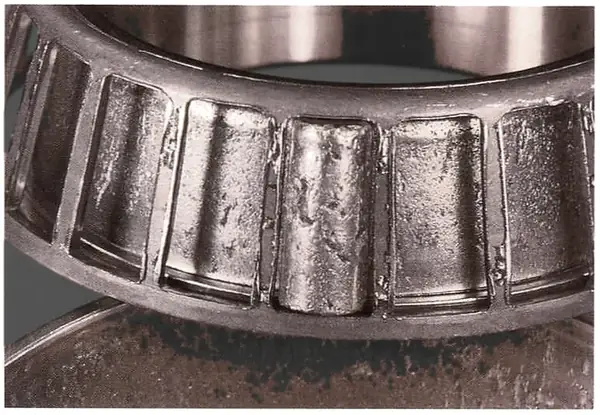
| What the raceway shows | Likely cause |
|---|---|
| Spall on a small part of the stationary race, small ends of rollers spalled | Bearing adjusted too loose, or adjustment lost in service |
| Even spall all round and from face to face | Adjusted too tight or too much thrust |
| Two or more spalled or worn load zones | Housing or shaft out of round |
| Heavier contact where the seat is tighter, straight edge on the contact band | Tapered bore or shaft, or a step in the housing bore |
| Pattern that wanders from one face to the other | Shaft or housing misalignment |
| Spall elongated along the shaft axis | Oil viscosity too low for the load and speed |
Check before you blame the bearing
Measure bore and shaft for roundness and taper, check adjustment procedure and end play records, and confirm the oil grade against load and speed before ordering the replacement.
Takeaway. Do not just count the spalls. Note whether they sit on the stationary or rotating race, how many zones there are, and whether the pattern is even or local.
Put it to work in the tool