

Loose fits, fretting and ring creep: reading the shaft seat and bore
Brown dust, polished bands and axial scoring on a seat mean the ring has been moving on it. The same signs on the bearing and the shaft tell one story.
What the movement leaves behind
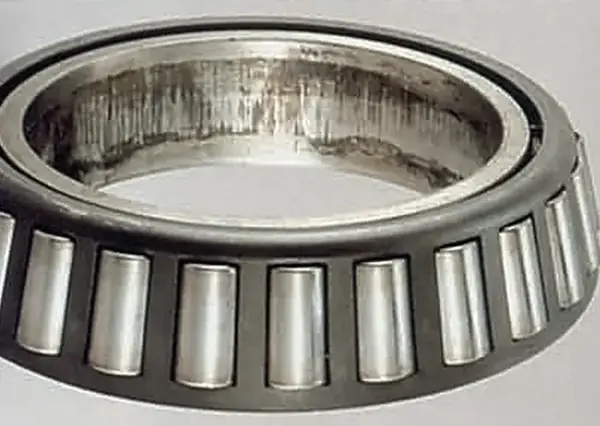
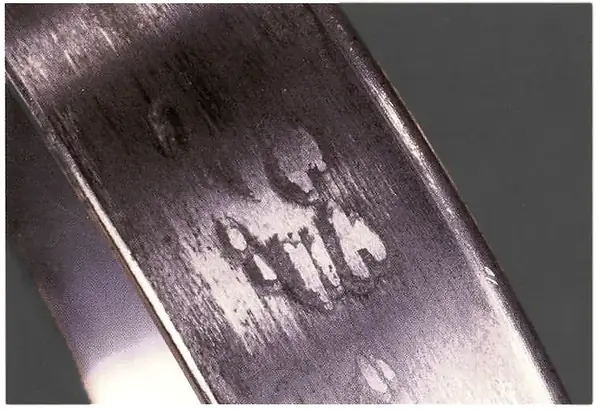
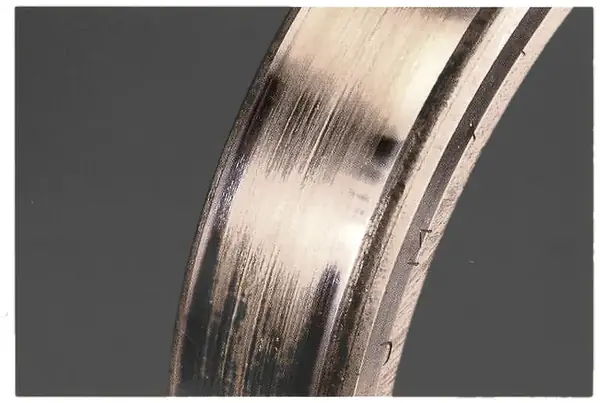
When a ring moves relative to its seat, two things can happen. Small relative movement produces fretting corrosion: reddish brown oxide and dull pitted patches. Continuous turning produces creep: smooth polished surfaces and wear on the ring face. Both mean the seat is not holding the ring. Causes include a shaft that is too small, a housing bore that is too large, a worn or damaged seat, a ring forced to move because rolling elements stopped turning, or foreign material trapped between ring and seat.
The opposite problem
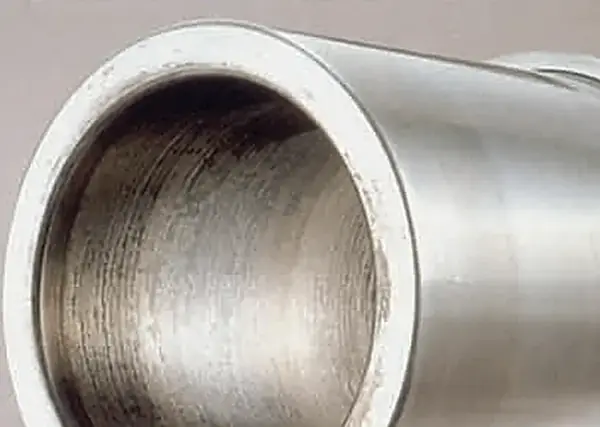
Too much interference is also visible. Scuffing on the bore surface and a ring that is hard to remove point to an excessive interference fit, which also takes up internal clearance and runs hot.
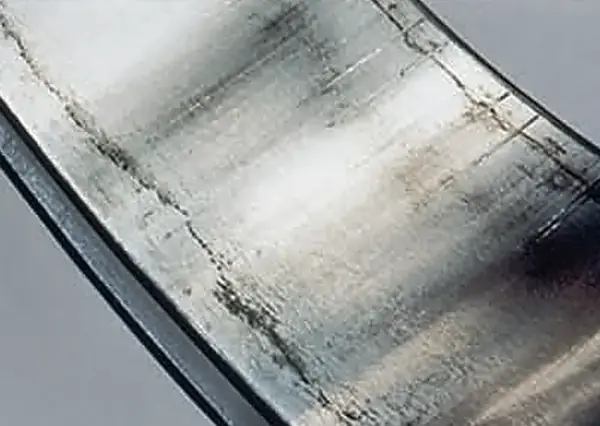
Field photographs: bearing and its shaft seat
The two field photographs below are shown as examples of what to look for. The reading is ours from the pictures alone and should be confirmed with measurements on the real parts.
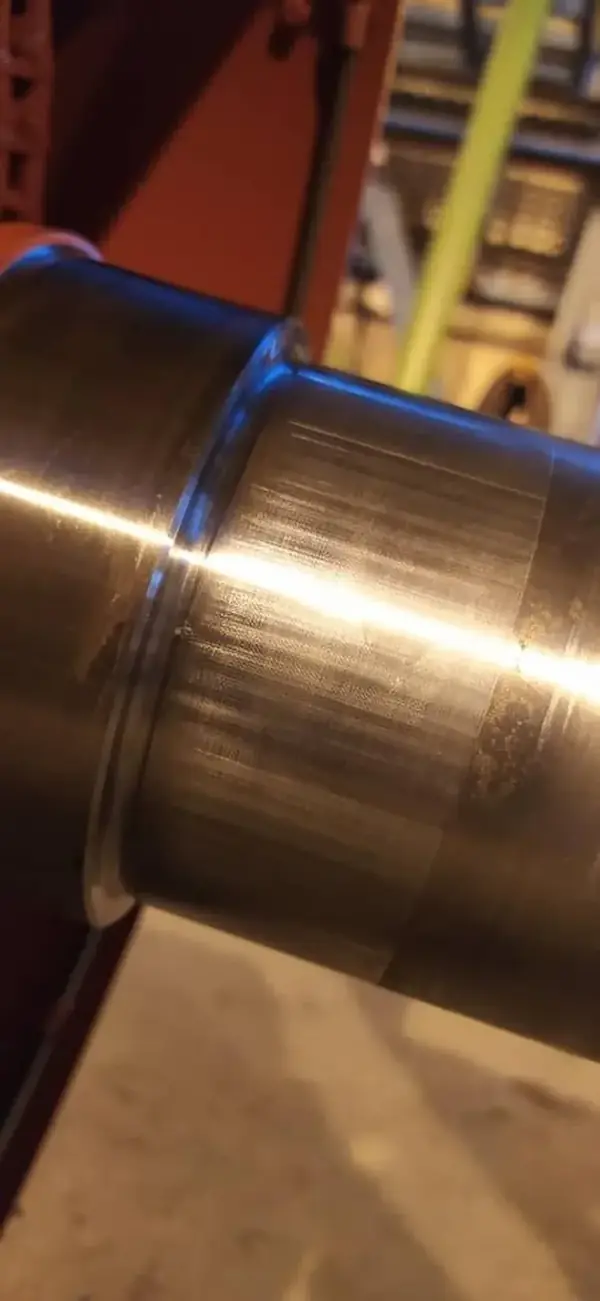
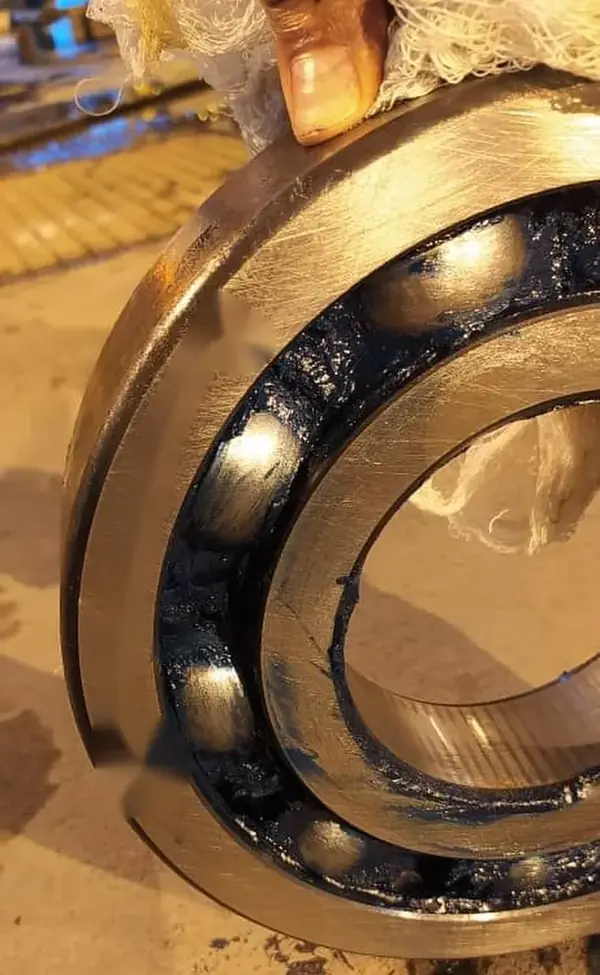
- Measure the shaft seat diameter, roundness and taper and compare with the tolerance for the shaft load class.
- Look at both parts. Fretting dust on the shaft and a polished bore belong together.
- Check shoulder squareness and radius; a poorly seated ring can also move.
- Repair the seat by a method that restores true dimensions and tolerance, not by shimming or sleeves unless the maker has approved it.