Rotec AI

Tools

Bearing SelectorPick the right bearing, step by stepVerify a BearingLife, safety factor and fitsLoad CalculatorLoads from your machineWorked templatesFan, gear and shaft load templatesCross-ReferenceSame size from other makersBearing AutopsyNewUpload a photo, get the likely causesFailure AnalysisRead damage, find the causeLubricationGreases, oils, cleanliness, oil lifeEquipment AnatomyMotors, pumps, fans, gearboxesFAQ and quick checksSearch the basics in plain languageFind a DistributorSuppliers by brand and city

Learn

Free calculatorsLife, grease, oil, loads and moreFind a bearingSize, rating and equivalents by designationFailure modesDamage types, causes and fixesKnowledge libraryLubrication and reliability articlesBearings by machineMotors, pumps, mills, kilns and moreHow-to guidesBearing life, grease, failures, numbersField casesFailure investigations and monitoring cases (licence)Lubrication guidesGreases, oil systems, oil life and costQuick answersPlain-language answers to common questions

More

PricingPartnershipsContact
Reading failed bearings

Fractures, impact load and the rare real manufacturing defect

Broken rings, split rollers and broken cages usually follow heavy overload or misalignment. A true bearing material defect is rare and has a recognisable signature.

Fractures

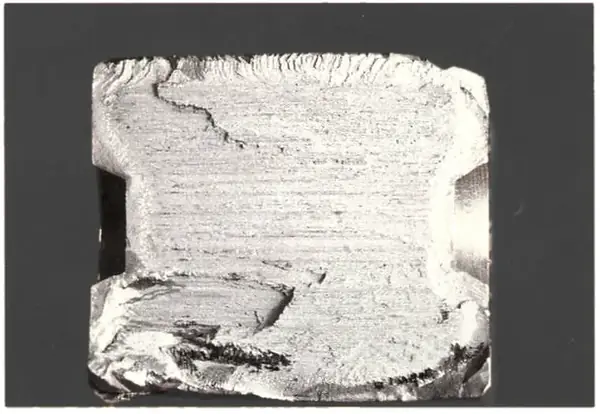
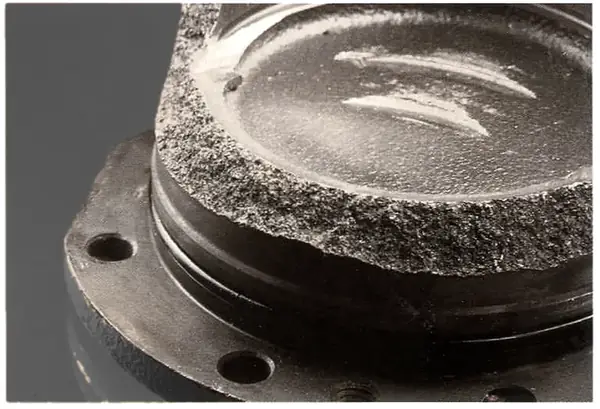
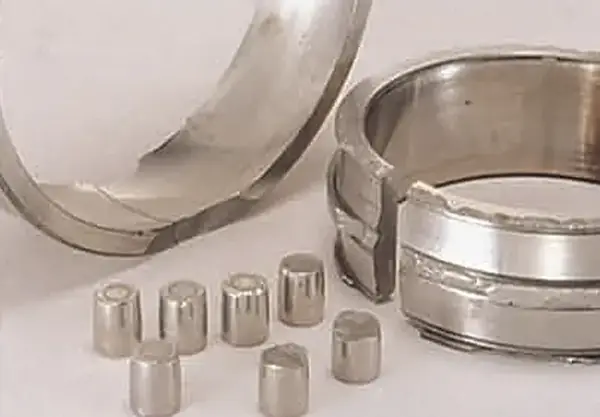
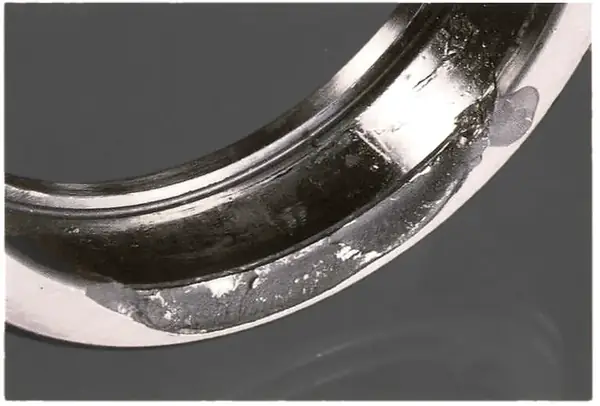
Fractures in races or rolling elements are normally due to heavy overload or misalignment. In the example set below, a winch gear shaft with a mating gear showing severe misalignment: the outer race at one end fractured from the prying action of the misaligned shaft, the rib on the other end fractured in a brittle way from shock, several rollers split in half (ductile in the soft core, brittle in the hard case), and the housing at one end fractured first, which caused the misalignment.
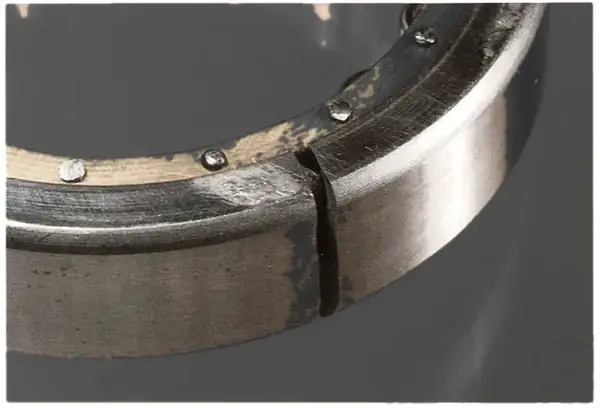
Outer race fractured by the prying action of a misaligned shaft.

Brittle fracture of an outer race rib, a sign of a severe shock load.

Rollers split in half: ductile in the soft core, brittle in the hard case.

Fractured housing. Fatigue is hard to see in cast iron, so also look for stress raisers and cyclic overload.

Impact load damage

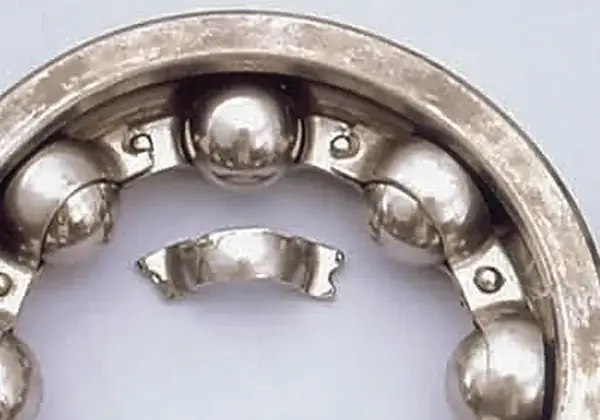
Impact and vibration also break cages and chip rings. Look at where the indentations are: if dents on a ball track repeat at ball pitch and later flake, an impact load was the start.
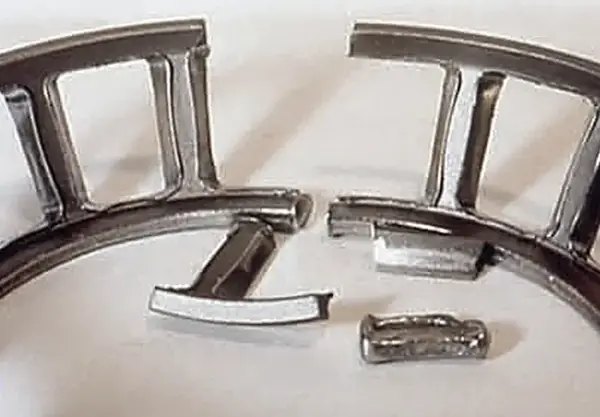
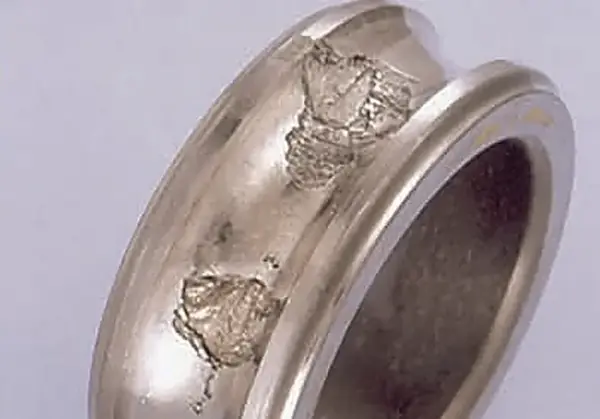
Broken cage from excessive vibration or impact during operation.

Flaking at ball pitch: indentations caused by impact load developed into flaking.

Cracks and chips on rings and rollers, with seizure caused by chips on the ribs: excessive axial impact load.

Broken cage from abnormal load due to misalignment.

Symmetrical fretting on the upper and lower sides of an outside diameter: misalignment.

When it really is the bearing

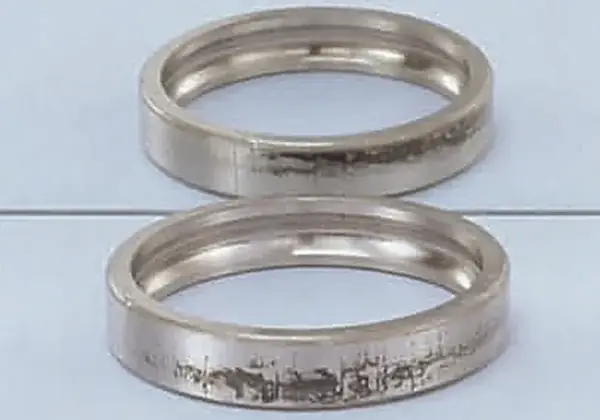
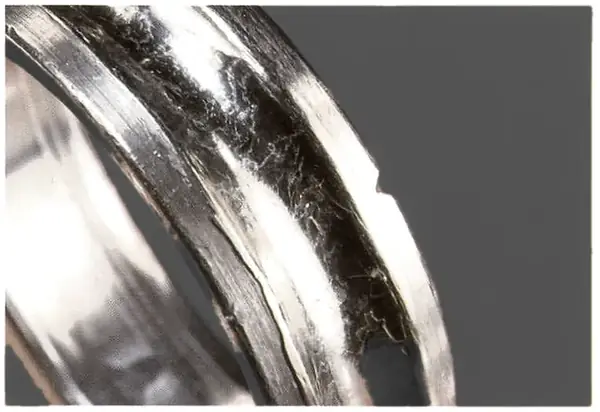
A bearing failed after only a few hundred hours: the cage was broken into many pieces; the outer race and balls looked almost normal with only light scuffing from cage pieces; the inner race had heavy plastic deformation and a notch that could be cut with a file, hardness below 20 HRC. There was no heat discoloration on the parts, so the hardness could not be explained by overheating. The inner race had most probably not been heat treated correctly.
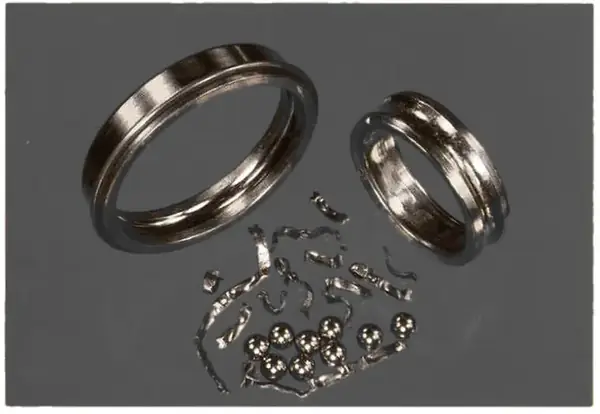
Bearing that failed within a few hundred hours with the cage broken into pieces.

The inner race plastically deformed: soft enough to cut with a file, with no heat colour on the parts.

Takeaway. Fractures say overload or misalignment; ask where the load came from. Only after those are excluded and hardness is wrong should material be suspected.
Put it to work in the tool

Related reading

Nine damage typesReading spall patterns on roller bearing racewaysOverheating and running dryDents on the racewayLoose fits, fretting and ring creepHandling and installation damage
All knowledge articlesBearing failure modesGrease selector