Handling and installation damage: dents, chips, cocked rings and heat removal
Damage done before the first revolution is the easiest to prevent and the most often misdiagnosed as a bearing fault.
Damage before start-up
If a bearing is dropped, struck or forced during fitting or removal, the races can be dented, cracked, chipped, smeared or scuffed. Some of this causes failure within hours; some shows up months later as a spall that starts at a dent.
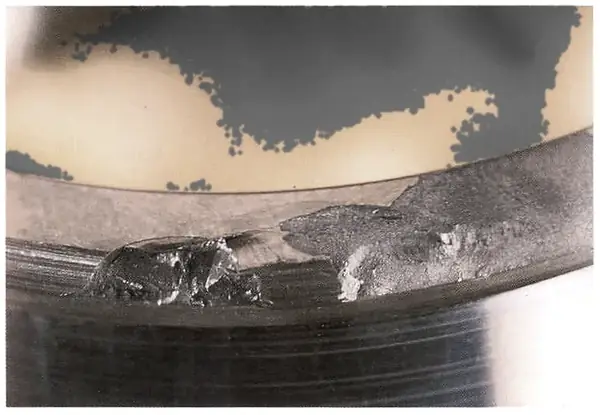
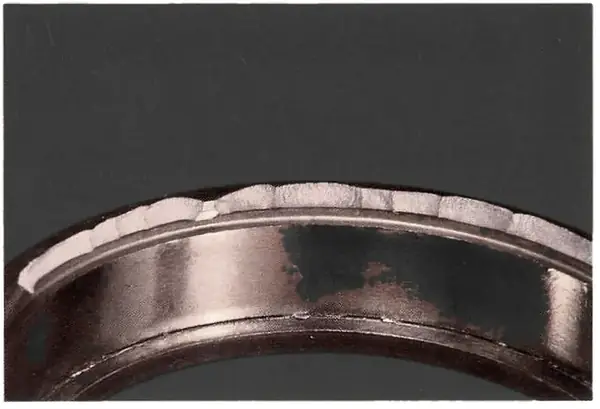
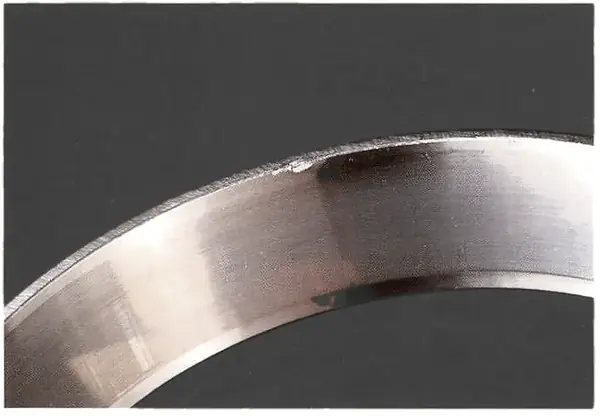
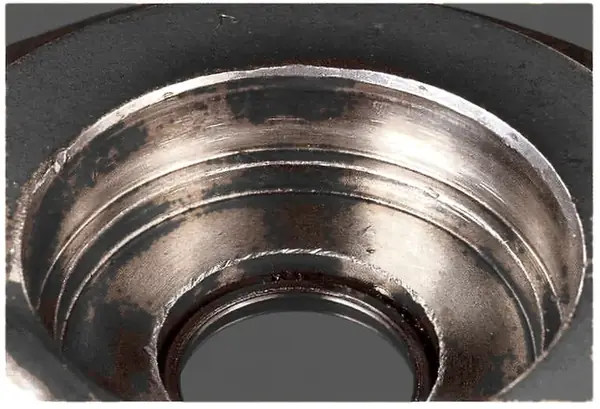
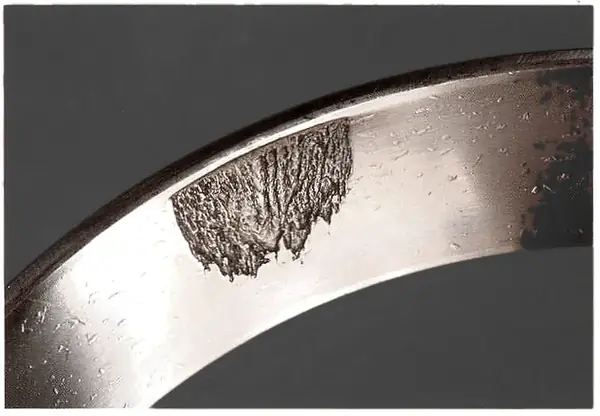
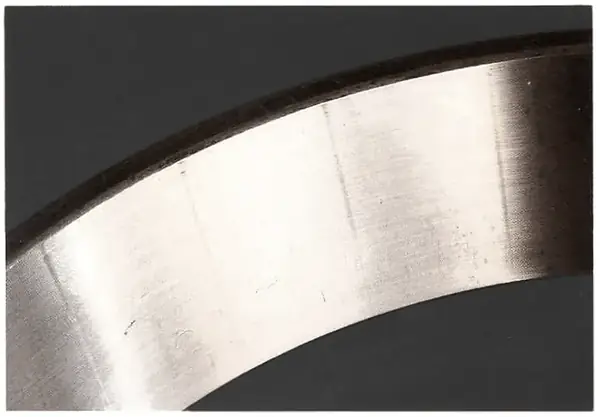
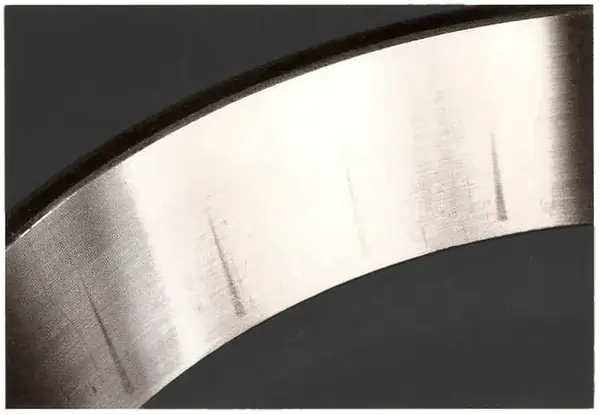
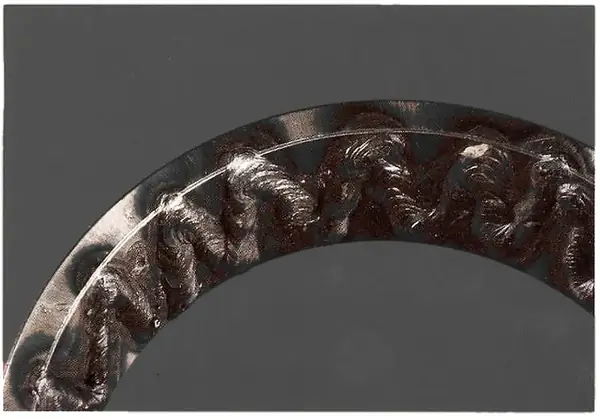
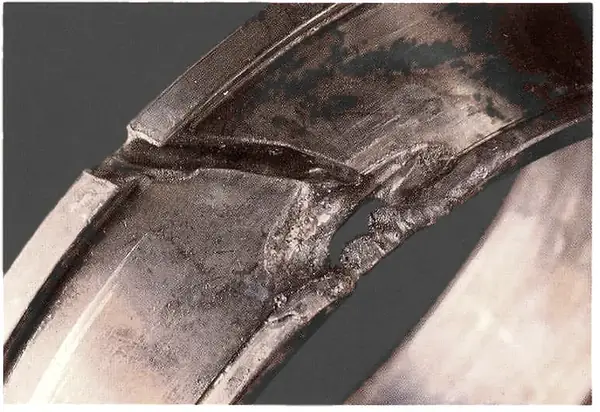
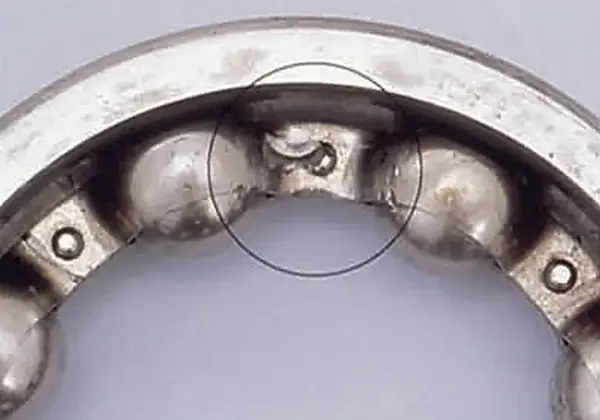
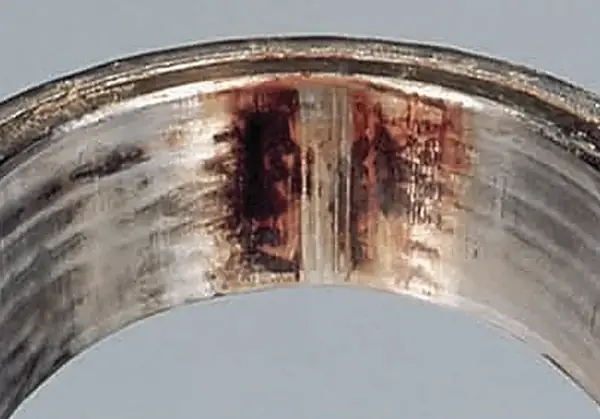
Impact on the rib face with local heat colour from the sliding action of the blow.Ribs chipped by driving one race in place through the other race and the rolling elements; cracks start on the inside of the rib.Dent from installing with a punch or chisel. A deep enough dent starts fatigue cracks or spalling.The same bearing was removed with a chisel; chisel marks in the housing raise high spots and reduce clearance.Spall in a localised area, with another about 120 degrees round, where housing high spots stopped the ring seating.A cup cocked in its bore: raceway smeared and brinelled by heavy misaligned pressure on the near side.The same cup 180 degrees away: marks concentrated at the other face.Outer ring loosened by running a weld bead on it to shrink it for removal: excess heat reaches the housing.Inner ring removed by flame cutting: the shaft got a raised high spot and a cut groove.Dents in a ball bearing cage from an impact.Scuffing and rust on a bore surface from diagonal assembly or foreign matter on the fitting surface.
Use fitting tools that apply force to the ring being fitted and only that ring; never through the rolling elements.
Do not dry bearings after washing by spinning them with compressed air; the rolling elements skid and scuff.
Avoid flame cutting and weld-bead removal. Use the removal tools in the service manual.
Check housing bores for burrs and high spots before the new bearing goes in.
Takeaway. If the damage pattern is local, sharp-edged or sits where a tool could have touched the part, ask the installer before blaming load or lubrication.