Rotec AI

Tools

Bearing SelectorPick the right bearing, step by stepVerify a BearingLife, safety factor and fitsLoad CalculatorLoads from your machineWorked templatesFan, gear and shaft load templatesCross-ReferenceSame size from other makersBearing AutopsyNewUpload a photo, get the likely causesFailure AnalysisRead damage, find the causeLubricationGreases, oils, cleanliness, oil lifeEquipment AnatomyMotors, pumps, fans, gearboxesFAQ and quick checksSearch the basics in plain languageFind a DistributorSuppliers by brand and city

Learn

Free calculatorsLife, grease, oil, loads and moreFind a bearingSize, rating and equivalents by designationFailure modesDamage types, causes and fixesKnowledge libraryLubrication and reliability articlesBearings by machineMotors, pumps, mills, kilns and moreHow-to guidesBearing life, grease, failures, numbersField casesFailure investigations and monitoring cases (licence)Lubrication guidesGreases, oil systems, oil life and costQuick answersPlain-language answers to common questions

More

PricingPartnershipsContact
Reading failed bearings

Corrosion and electrical damage: photo guide

Rust at roller pitch means moisture while stationary. Pits and flutes mean current. Both leave patterns you can read at a glance.

Corrosion

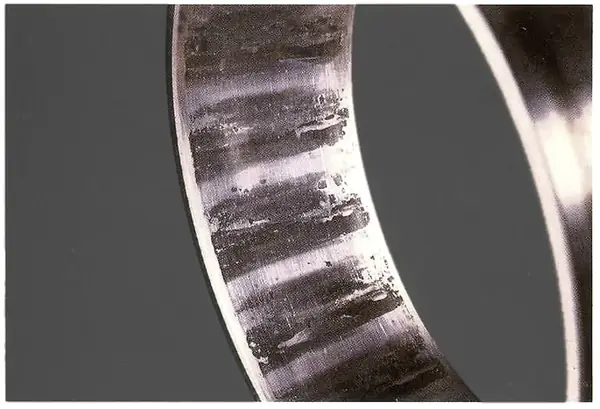
Bearings pulled from a machine rust quickly, so protect them with oil, grease or rust inhibitor straight away. Corrosion can also occur in service, especially while the machine is shut down: static corrosion or black acid etching.
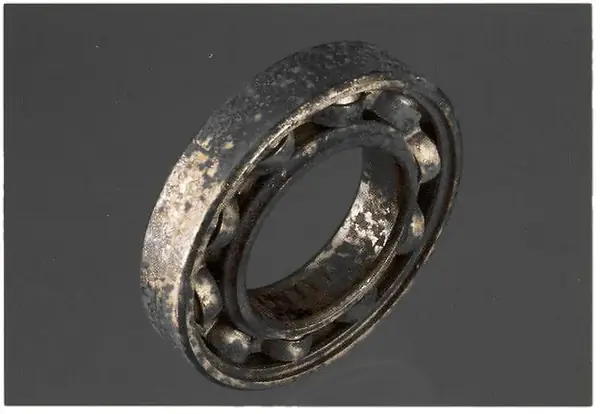
Atmospheric corrosion on a ball bearing.

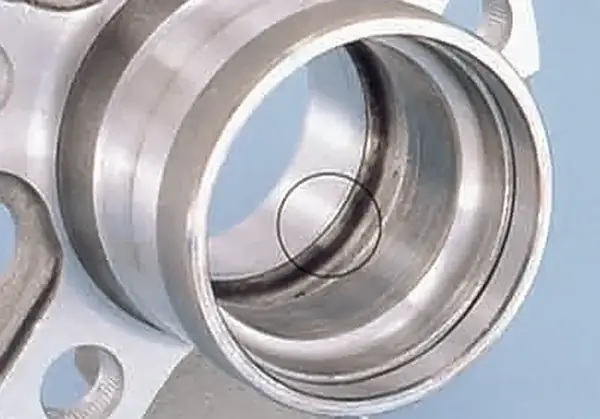
Static corrosion or black etching on a raceway.

Rust patches on the raceway at roller pitch: bearing left unused for a long period under moist conditions.

Rust on one row of the raceway: water contamination during operation.

Flaking around half the raceway caused by rust.

Electrical damage

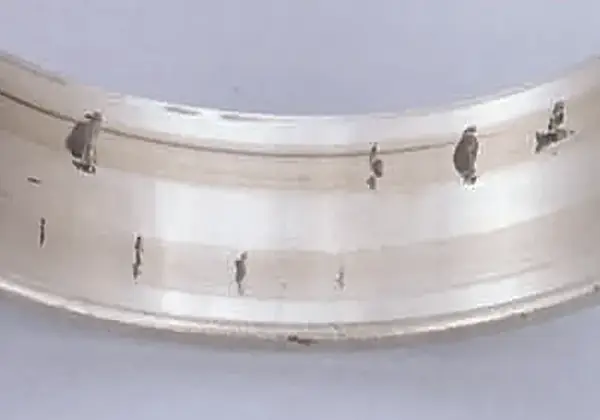
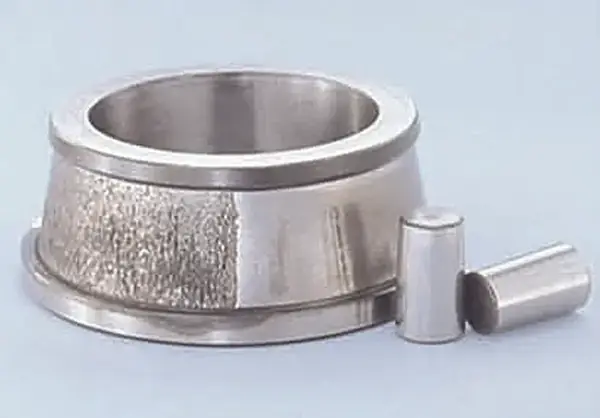
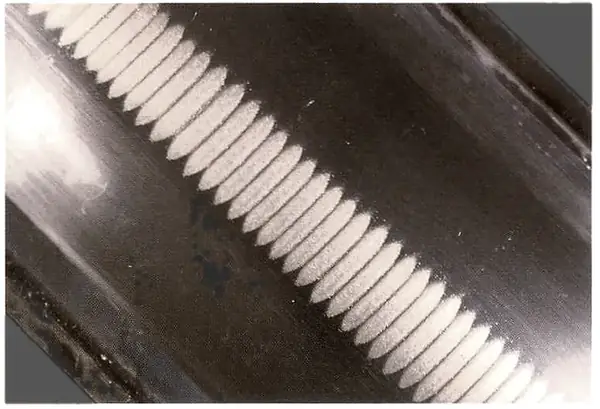
Current through a bearing damages it in two ways. Large currents, such as from arc welding while the bearing is stationary, make large local pits. Small currents over a long period while the bearing rotates make many small pits, often lined up in axial bands called fluting.
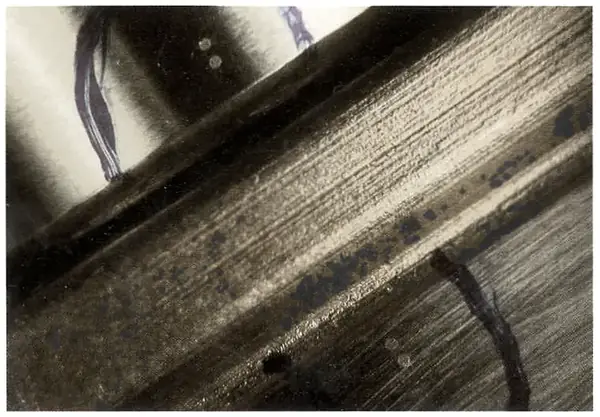
Large currents: large localised pits. The lower two pits are on the raceway; the matching pits above are on a roller.

Small currents: many small pits clustered in axial lines, called fluting.

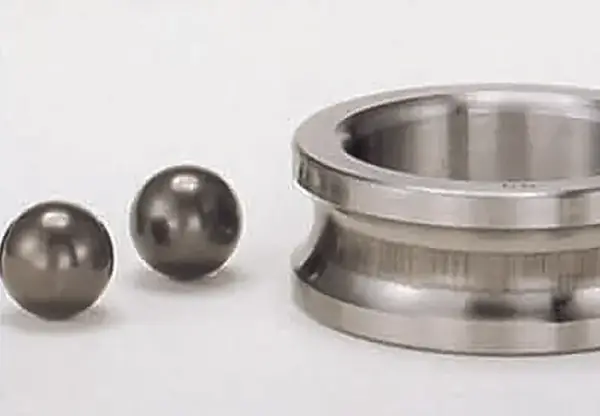
Electric pitting on balls and a raceway.

Takeaway. Corrosion and current leave regular patterns; wear and fatigue are irregular. A repeating pattern is a clue to the external source.
Put it to work in the tool

Related reading

Nine damage typesReading spall patterns on roller bearing racewaysOverheating and running dryDents on the racewayLoose fits, fretting and ring creepHandling and installation damage
All knowledge articlesBearing failure modesGrease selector