Rotec AI

Tools

Bearing SelectorPick the right bearing, step by stepVerify a BearingLife, safety factor and fitsLoad CalculatorLoads from your machineWorked templatesFan, gear and shaft load templatesCross-ReferenceSame size from other makersBearing AutopsyNewUpload a photo, get the likely causesFailure AnalysisRead damage, find the causeLubricationGreases, oils, cleanliness, oil lifeEquipment AnatomyMotors, pumps, fans, gearboxesFAQ and quick checksSearch the basics in plain languageFind a DistributorSuppliers by brand and city

Learn

Free calculatorsLife, grease, oil, loads and moreFind a bearingSize, rating and equivalents by designationFailure modesDamage types, causes and fixesKnowledge libraryLubrication and reliability articlesBearings by machineMotors, pumps, mills, kilns and moreHow-to guidesBearing life, grease, failures, numbersField casesFailure investigations and monitoring cases (licence)Lubrication guidesGreases, oil systems, oil life and costQuick answersPlain-language answers to common questions

More

PricingPartnershipsContact
Reading failed bearings

Dirty lubricant, adhesive wear and poor lubrication: photo guide

Surface finish tells you what was in the oil. Matte and satin means fine abrasives; smeared and torn means sliding; dents mean debris.

Abrasive wear

Dirt or sand in a lubrication system wears bearings. The task is to find the exact source: debris built into the system, cracked housings or hoses, entry through failed seals, contaminated grease. Use magnification to identify the particle type; it leads to the root cause. Fine abrasives in oil usually leave a matte or satin finish on the raceway and rolling elements.
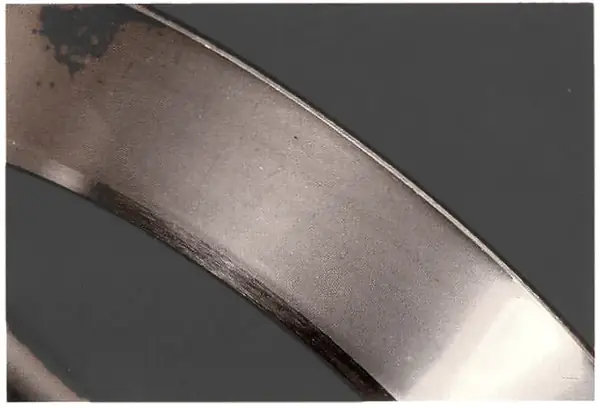
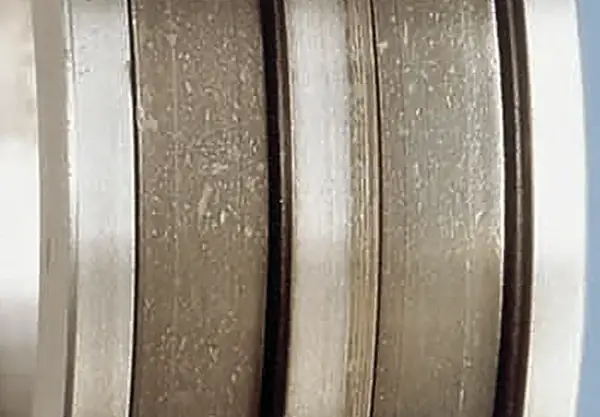
Satin finish on a raceway from fine abrasives in the oil.

Indentations on a raceway from foreign matter or flakes from another bearing.

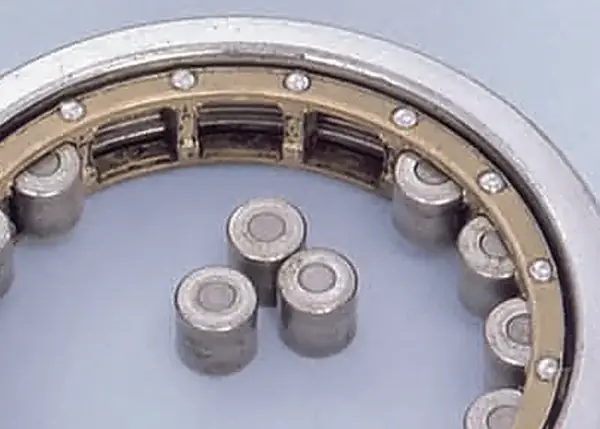
Smearing and wear on a roller from lubricant contaminated with water or other matter.

Adhesive wear

With enough cool oil to control heat, the rollers can still stop turning and start sliding. Causes include cage wear or breakage, which lets rollers skew and skid; heavy axial load; starvation. The surface looks torn and smeared.
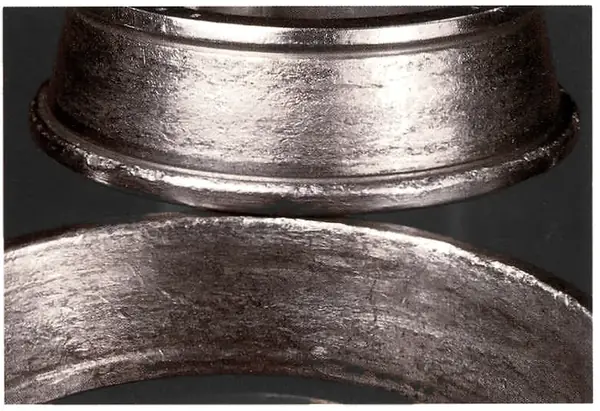
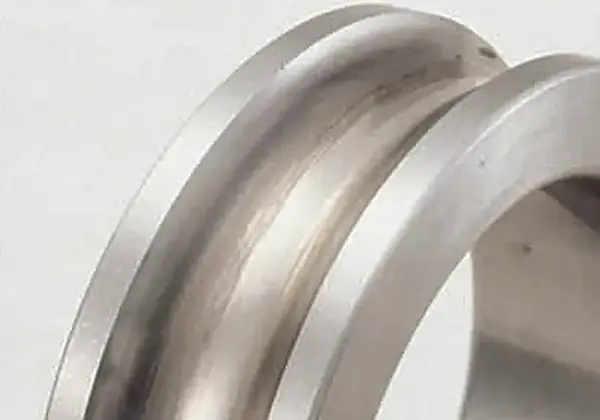
Adhesive wear with enough oil supply to cool the parts.

Smearing on a raceway from improper preload.

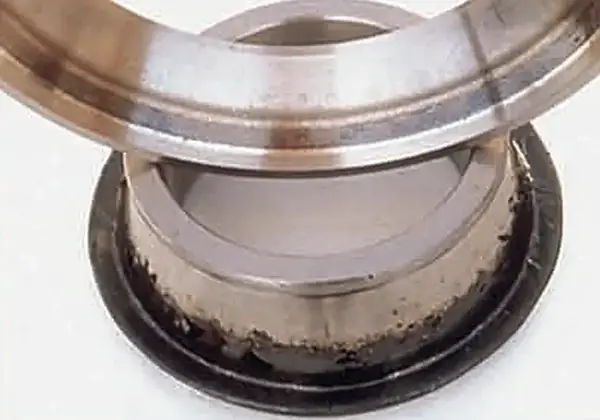
Seizure at roller end surface and inner ring rib: not enough end play during assembly.

Improper lubrication method or product

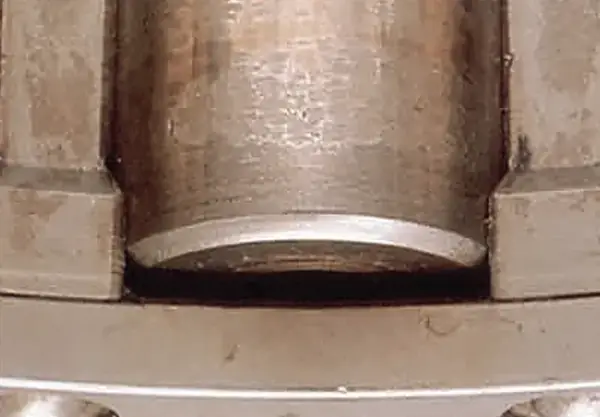
Wrong lubricant or poor application shows as heat colour on the track, scuffing on roller ends and ribs, and wear on cage pockets and guide surfaces.
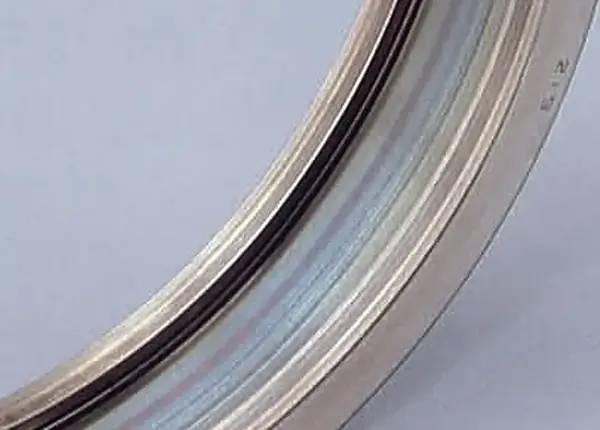
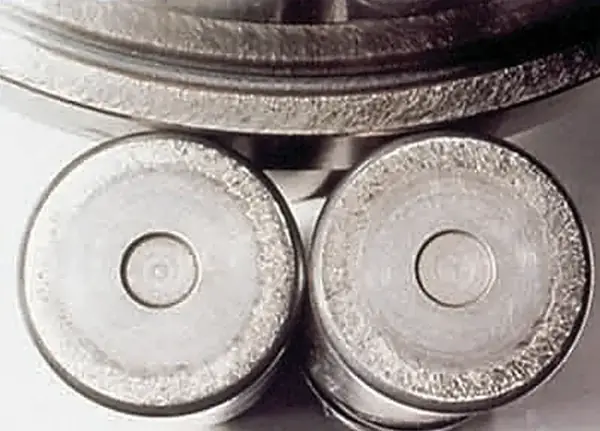
Heat discoloration on the raceway and cage guide surface.

Scuffing on roller end surface and inner ring rib.

Wear on cage pocket surfaces.

Takeaway. The surface texture is the quickest indicator. Match it to the contaminant, then trace it back to a seal, a breather or a filling habit.
Put it to work in the tool

Related reading

Nine damage typesReading spall patterns on roller bearing racewaysOverheating and running dryDents on the racewayLoose fits, fretting and ring creepHandling and installation damage
All knowledge articlesBearing failure modesGrease selector