

Condition monitoring
Three kinds of looseness and how each shows up in the data
Quick answer
Structural looseness, a loose bearing fit and loose bolts all show harmonics of running speed, but they differ in direction, phase and consequence. Knowing which you have decides the fix.
The three kinds
| Kind | Where it is | Signature | Typical fix |
|---|---|---|---|
| Structural | Frame, foundation, pedestal, base bolts, grout | 1X with harmonics, one radial direction much higher than the other, often a phase jump across the joint | Re-grout, re-bolt, stiffen the support |
| Bearing seat or fit | Bearing in its housing or on its shaft | Harmonics of 1X in the envelope spectrum, fretting marks, widening bore | Restore the fit: re-machine, sleeve, correct the tolerance |
| Bolt or part looseness | Cover plates, mounting bolts, guards | 1X with harmonics, a drop in level when torque is restored, often a hot bearing nearby | Re-torque, check thread condition, use locking |
Field evidence from three cases
- A precipitator fan had 113 mm/s horizontal against 21 mm/s vertical at one bearing: structural, in the base.
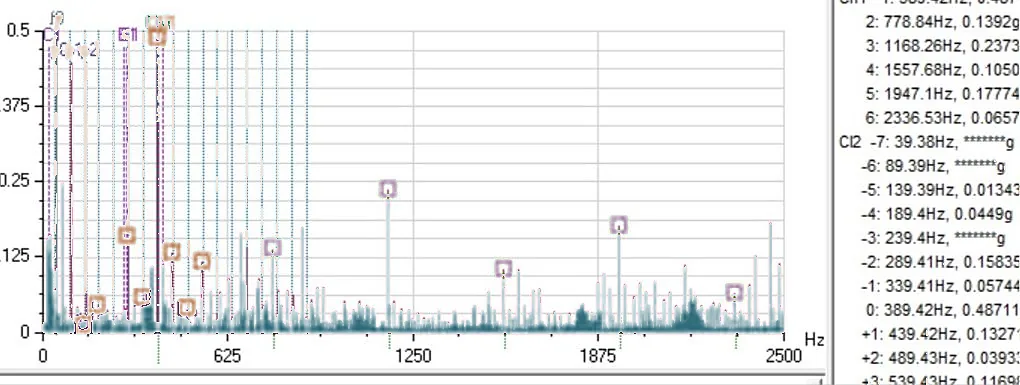
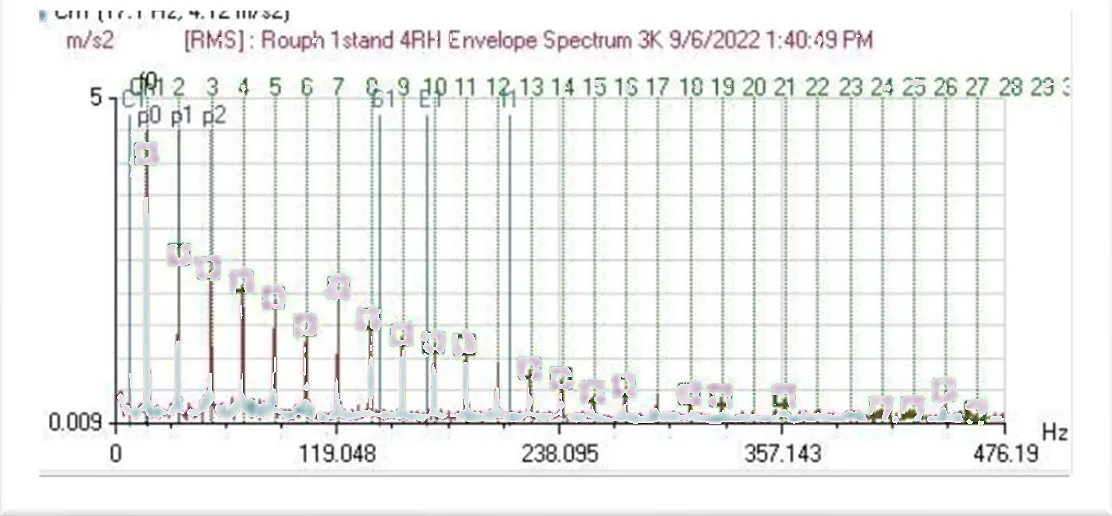
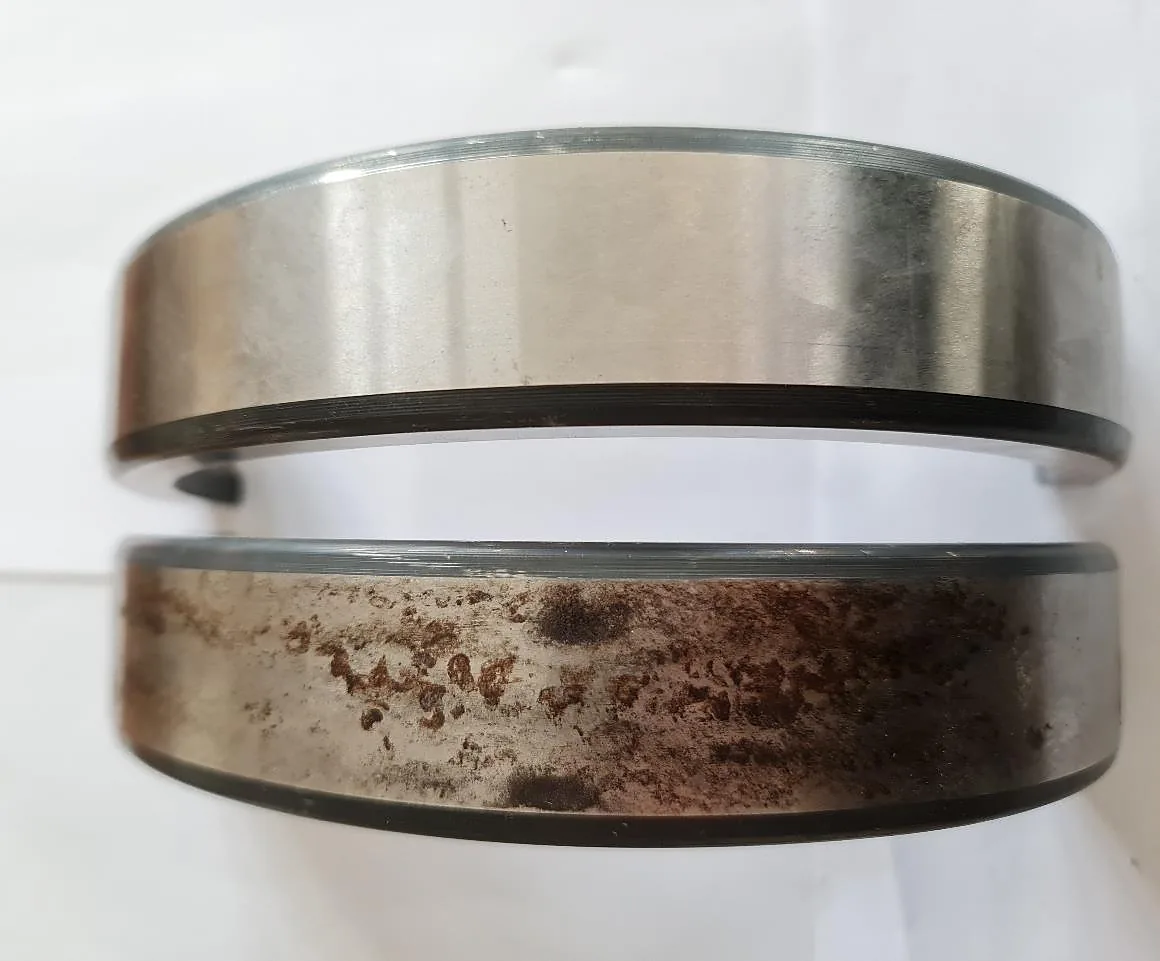
- A roughing mill gearbox bearing showed shaft-speed harmonics in the envelope: a loose fit with fretting, which also explained why alignment would not hold.
- A condensate pump with loose bolts ran at 57 °C. After re-torquing, vibration fell from 2.94 to 0.38 mm/s and temperature to 36 °C.
How to tell them apart
- Compare directions. A big difference between two radial directions at the same point suggests the support is weaker in one.
- Measure phase across the joint: foot to frame, frame to base. A jump of about 180° across a joint shows that joint is loose.
- Look at the envelope spectrum for the bearing: shaft-speed harmonics with no defect line suggest a loose fit.
- Do a bolt-by-bolt check while watching the live reading, as in a dynamic soft foot test.
Takeaway. Three kinds of looseness, three fixes. Direction, phase and the envelope spectrum tell you which one you have.
Put it to work in the tool