

Condition monitoring
Bent shaft or overhung unbalance: two causes that both show 1×
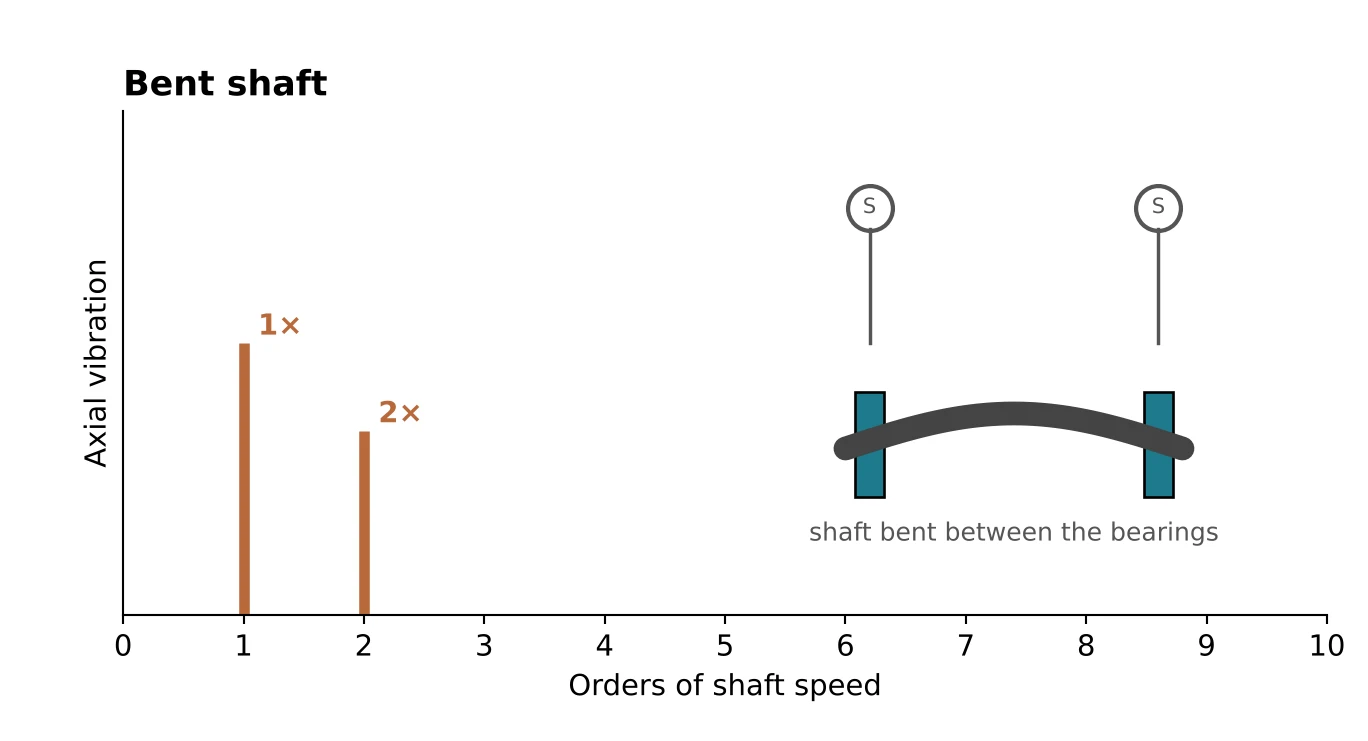
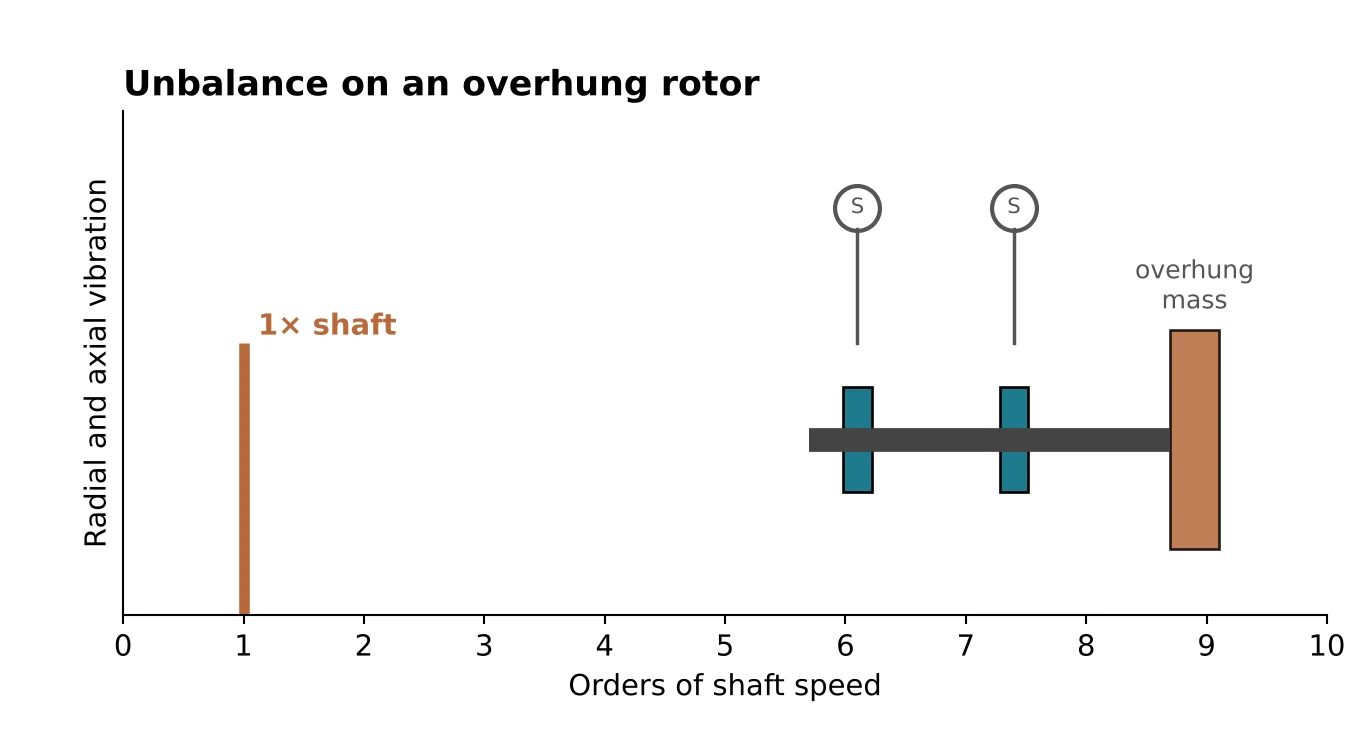
A 1× peak does not always mean unbalance. A bent shaft and an overhung rotor look alike at first. Axial vibration, the 2× peak and phase tell them apart.
The mistake
Seeing a 1× peak and ordering a balance is the most common quick conclusion in vibration work. Two causes are often confused: a bent shaft and unbalance on an overhung rotor. Balancing a bent shaft will never remove the cause.
The signatures side by side
| Bent shaft | Overhung unbalance | |
|---|---|---|
| 1× | Strong | Dominant |
| 2× | Clearly present | Little or none |
| Direction | Often strong axial vibration | Mostly radial, with some axial |
| Phase | Differs between the bearings | Steady and in step across the bearings |
| Why | The shaft wobbles through each turn, which adds harmonic content | The mass sits outside the bearings, which gives a stronger rotating force and higher levels |
What to do
- 1× plus 2× with axial vibration and a phase difference between bearings: check the shaft for bending, with a dial gauge at several points along it.
- Strong radial 1× with an overhung rotor and no 2×: suspect unbalance, and balance the overhung mass.
- Measure all three directions and the phase before deciding. A single reading is not enough.
- After any correction, repeat the readings and compare against the baseline.
Where it happens
Fans with the impeller on the shaft end, pumps with overhung impellers and mixers are the usual overhung cases. A shaft can bend from thermal stress after a stop, from a heavy shock, or from a poorly stored spare.
Takeaway. A 1× peak is a starting point, not a diagnosis. Look for the 2× peak, the axial reading and the phase. Balancing a bent shaft treats the symptom, not the cause.
Put it to work in the tool