

Lubrication
Greasing by condition: use the waveform and the ultrasound reading, not only the calendar
Quick answer
A time-based greasing schedule does not know how the bearing feels. Condition-based greasing adds grease when a reading says so, and stops when it reads right. It avoids both too little and too much.
The two ways to be wrong
| Too little grease | Too much grease | |
|---|---|---|
| What happens | The film thins, metal touches metal | The grease is churned, heats and drags |
| Typical reading | High frequency noise rises | A wide band of noise, sometimes defect-like lines |
| Result | Wear and early fatigue | Heat, leakage, and skidding of the rolling elements |
Two real cases
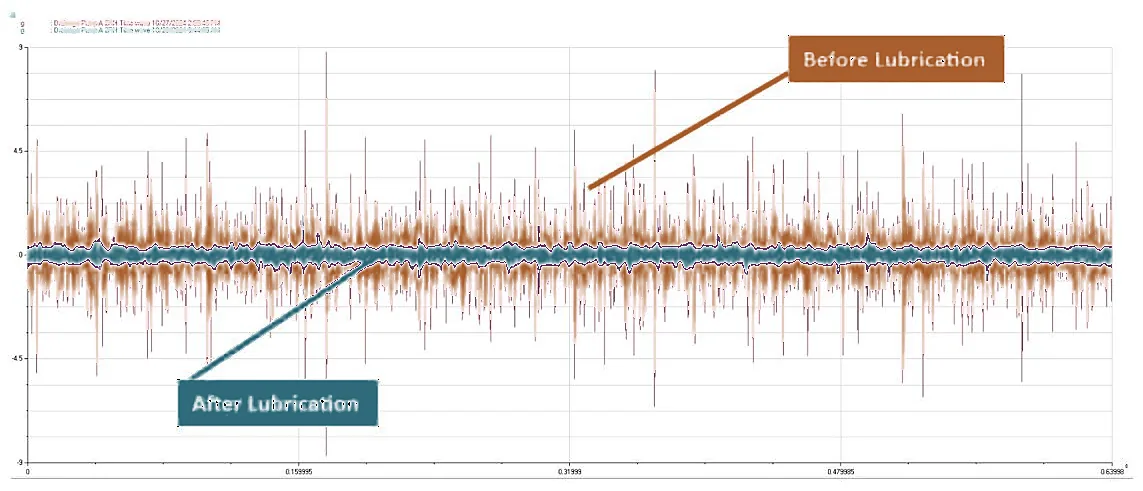
- A bearing on the maker's time-based interval kept high vibration. Greasing by condition brought the waveform down to a narrow band.
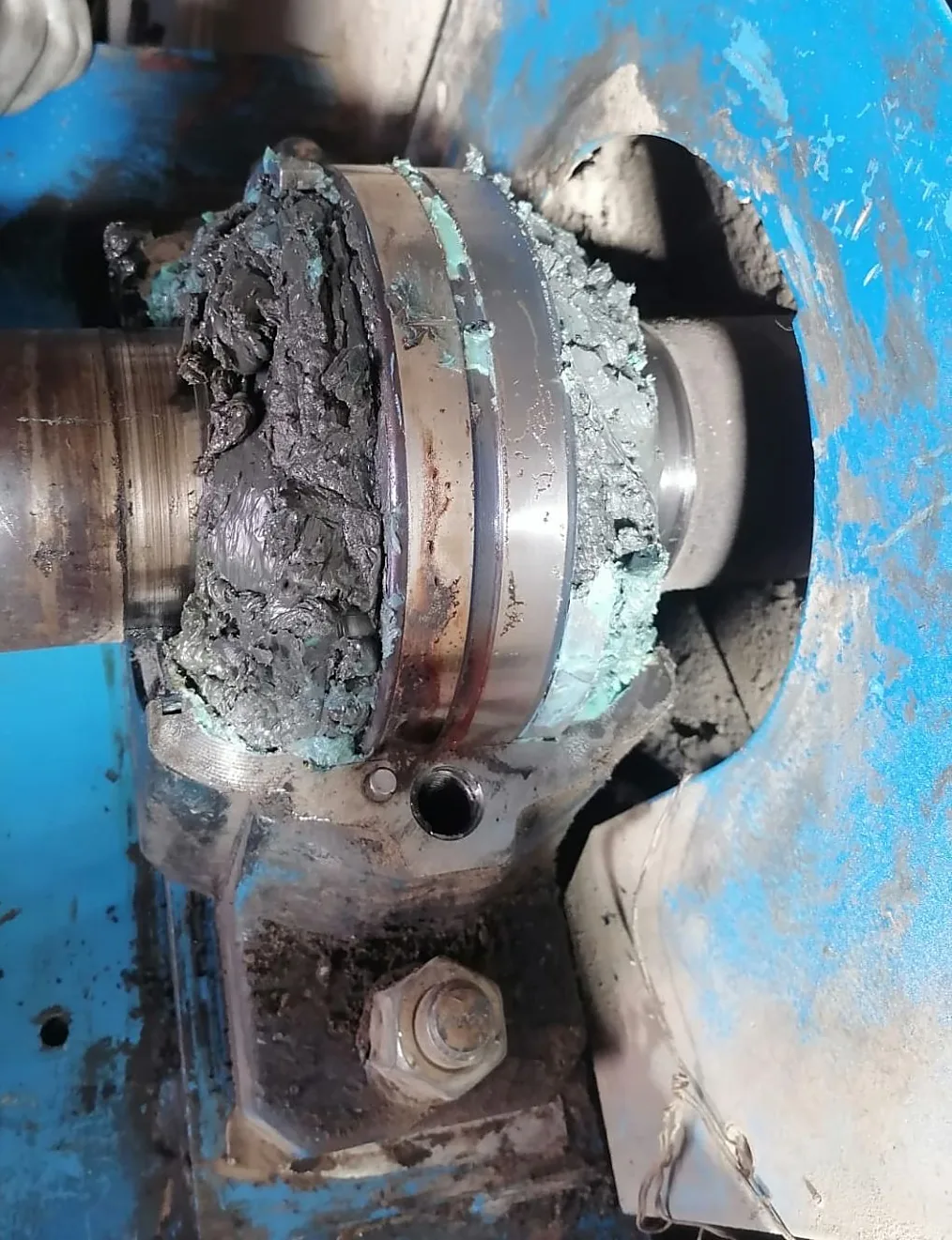
- A bearing was greased during a demonstration while an ultrasound tool guided the amount. The tool reported overgreasing, and the vibration data showed BPFI harmonics with shaft-speed sidebands. The opened housing was packed with grease, and the ring showed smearing that points to skidding.
A method
- Measure before you grease: a high-frequency reading and a waveform.
- Add grease slowly, in small steps, while watching the reading.
- Stop when the reading settles. More grease will not help and can hurt.
- Measure again and keep both readings.
- Log the quantity. Over time you learn the right amount and interval for that bearing.
Cautions
- Inner race defect lines can appear in an overgreased bearing. Repeat the measurement after correcting the grease before you call a defect.
- An ultrasound reading depends on the sensor, the distance and the settings. Use the same ones each time.
- A defective bearing will not be cured by grease. If the reading does not fall after greasing, look for a defect.
Takeaway. Measure, grease a little, measure again. Stop when the reading settles.
Put it to work in the tool